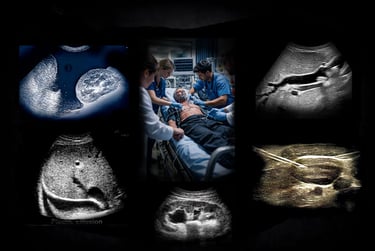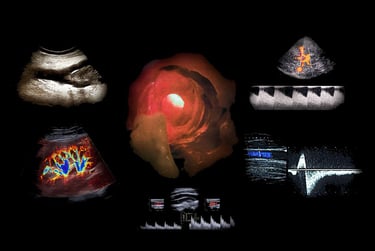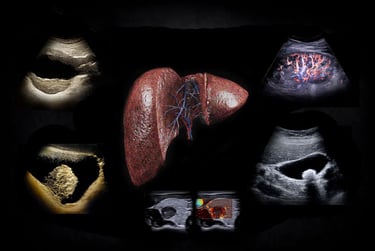
Held continuously since 1983, this hands-on intense course will set you on the most practical and effective protocol to image the upper abdomen. You’ll learn how to orient yourself to three dimensional anatomy with two dimensional imaging and document every pertinent feature of each organ. Both physicians and non-physician clinicians will find the class a bedrock foundation to rapidly advance in the field.
Our total immersion approach has you at the bedside from the first day. You'll learn and practice over and over the complete head-to-toe protocol for assessment and measurement of all structures. The very small group setting fosters group interaction and collaborative learning.
To help you gain proficiency with probe orientation and system controls the scan lab is open 24 hours for your independent practice on yourself or you peers.
Intensivists , emergency physicians, and primary care practitioners will find the focus on the hepatobiliary system alone a solid investment of their time.
From the smallest hospitals to Harvard Medical School
& St. Jude Children's, we've served them all.
In the industry from GE & Philips to Toshiba and Siemens;
solo practitioners to the entire Puerto Rico Cardiology Society.
Single-event or ongoing Resident training anywhere.
-Individuals or groups of any size, working within your practice hours
-Special programs for Resident training
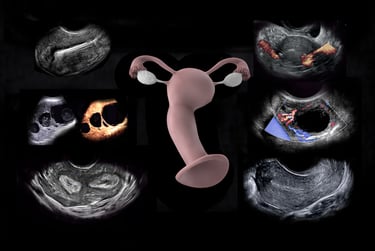
HOURS: Monday-Thursday 9am-4pm daily, adjourn by noon Thursday followed next day by our optional Hands-On Transvaginal Imaging class.
LOCATION: Class held on site at the Hyatt House Suite Hotel, Irving, Texas. Discounted student rate guaranteed.
TUITION: $2000 (US funds) Class size strictly limited;
registration in accordance with our administrative policies.
International students click here to request letter of invitation.
TARGET AUDIENCE
ALLIED HEALTH PROFESSIONALS, regardless of ultrasound experience, who will be cross training into ultrasound and who will return to a clinically active, proctored environment.
GRADUATES of accredited sonography programs who desire to review and/or deepen their understanding of clinical pathophysiologic relationships among organ systems.
FAMILY PRACTICE, INTERNAL MEDICINE AND HOSPITALIST PHYSICIANS who wish to add a codified, targeted approach to use of ultrasound in the abdomen.
SONOGRAPHERS who have performed abdominal ultrasound for for any period who lack formal training in the formal protocol for acquisition, measurement, and analysis of data.
RESIDENT PHYSICIANS beginning their ER, FP, IM, or Radiology rotation or fellowship.
ENGINEERS or RESEARCH PROFESSIONALS contemplating the use of abdominal ultrasound as and end-point measurement tool for any clinical project.
OBJECTIVES
This course is conducted independent of any commercial or institutional grant, industry support or sponsorship. No faculty members have any commercial interests or participation that might influence its content. Upon completion of this activity, you should be able to:
-Perform and document a complete ultrasound imaging scan of the upper abdomen, including all measurements.
-Identify normal gross and substructural anatomy and use standard terminology to describe them; differentiate these true findings from artifact consistently.
-Systematically evaluate the sonographic appearance of each component of every organ and correlate it to the Obstruction-Infection-Infiltration-Mass-Exudation matrix model.
-Describe the histologic basis for acoustic appearance of tissues and structures of different echogenicity; apply this to the differential analysis of soft tissue pathology, shadowing vs. non-shadowing gallstones, and vessel thrombosis.
-Demonstrate the complete protocol for evaluation of AAA and dissection, including assessment of the root and arch segments.
-Describe the baseline and altered Doppler blood flow patterns from each of the following blood vessels:
- aortic root, arch, and abdominal/iliac segments
- inferior vena cava
- celiac, hepatic, and splenic arteries
- superior mesenteric artery
- main, segmental, interlobar, and arcuate renal arteries
- portal, splenic, and hepatic vein branches
-Discuss the fallacy of dating the age of thrombus by ultrasonic means; identify factors that may support differentiation of chronic vs. acute occlusion.
-Instantly optimize color and spectral Doppler to maximize sensitivity for any vascular flow state under any circumstance.
-Perform any Doppler assessment of any vessel using proper angle correction to maintain compliance with ICAVL Standards.
-Relate pertinent laboratory test data to ultrasonic findings to deepen understanding of interrelated pathologies and use this to extend the abdominal scan when appropriate.
-Demonstrate proper electrical and biosafety measures and apply proper body mechanics to minimize patient and operator risk.
Physicians who attend this course will find these of special interest:
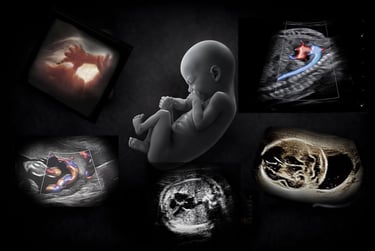
Practice the complete protocol for the BPP and head-to-toe anatomy scan, including cardiac; optional TV imaging.
These will be as if the Expert sat down with you in the Coffee Shop and took the time to tell you everything, in a way you could understand it, at a pace you liked. Your every question is going to get answered.
Continuing education for the echocardiographer: Digs deeper into the protocol and process of CV dynamics at rest and activity. Includes EKG assessment of STEMI , ischemia, and lethal cardiac arrhythmias.