Welcome to Keith Mauney and Associates Ultrasound Training Institutes 800.845.3484
Founded 1981, Southwestern University of Texas
Medical School
INSTITUTIONALLY & COMMERCIALLY INDEPENDENT


800.845.3484            972.353.3200            Fax: 817.577.4250

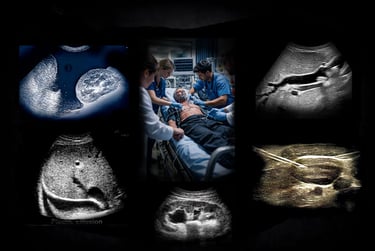
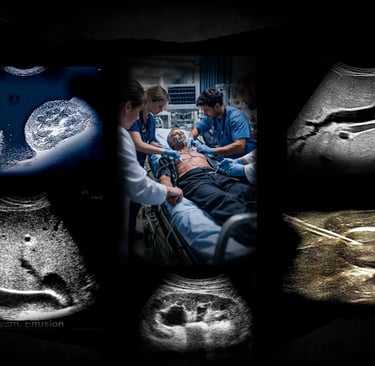
  Hands-On Emergency/Hospitalist Ultrasound: The FAST & RUSH Exams


A Completely Hands-On Course for ALL Healthcare Professionals

Immediate Benefits
This is much more than a focus in abdominal trauma sonography, and more in depth than the rapid ultrasound protocol for shock and trauma.  This course puts the probe in your hand from the first hour and continues to the end.  This will take months off your kinetic learning curve and years off the development of the systematic mindset.   It fills every class hour with guided hands-on practice, and afterwards the Scan lab is open 24 hours for optional self guided experience.  You can even bring your own equipment to fine tune your own instrument skills.
Target Audience
This course is targeted to healthcare professionals from all specialties.  Prior attendees have included physicians at every point in their career, PA’s nurses, and paramedics.   No knowledge or experience with ultrasound is necessary.  Our independent learning resources, available during class, will bridge any gap in physics and instrumentation principles.

All students have perpetual access to our same Team for post conference questions and support, for free.


Schedule

9:00-4:00pm, Adjourn 12:00 Noon final day.

Hands-On Scan Lab open 24 hours during course.


CME Hours

Approved for 11 AMA PRA Category I CME credits .


Tuition

$600 (US funds). Includes course attendance, 24 hour Hands-On Laboratory, all course materials, and light lunch on the first day.
Hotel guests are offered complimentary breakfast each morning
and Social Hour with beverages and hot hors d'oeuvres Monday-Thursday. Post conference mentoring support is free forever.


Available Dates

 April 28-29

June 9-10

July 21-22

August 17-18

September 1-2

November 9-10

Dallas, Texas

Dallas, Texas

Dallas, Texas

Dallas, Texas

Dallas, Texas

Dallas, Texas

Dallas, Texas


Hands-On Cardiac Imaging follows the next day
Hands-On Abdominal Imaging follows the next day
Objectives

Upon successful completion of this course the learner should be able to:

  • Execute a rapid and systematic protocol for assessment of each of the following:
    • Perihepatic fluid and portal venous hypertension
    • Urolithiasis, hydronephrosis, and microcirculatory renal function
    • Perisplenic fluid
    • AAA and dissection, including aortic root and arch involvement
    • Pericardial effusion, including differentiation of suspected hemopericardium
    • Global and regional myocardial dysfunction, including RV/IVC dimension
    • Aortic and mitral valvular regurgitation
    • Pleural fluid
    • Hemothorax
    • Extracranial carotid occlusion
    • Incorporate a full-field method of developing a systematic method to critical conspicuity, for purposes of evaluating the entire content of any ultrasound image immediately.
    • Expedite your future learning curve by describing the fundamental components of the real-time ultrasound imaging system and discuss the role of each.
    • Perform an appropriate visual inspection of the ultrasound system to identify any obvious defective condition that might compromise patient or operator safety.
    • Implement quality control standards immediately, first by describing the criteria for optimal image or Doppler signal display for any condition, then taking measures to obtain it.
    • Inculcate a multidimensional mindset to traslate two dimensional relationships to three dimensional and vice-versa using core principles of abstract spatial reasoning.
    • Set up any ultrasound system to maximize input dynamic range and match its gray scale output capability, optimized for the human eye.
    • Understand and make full use of post processing controls to amplify soft tissue differences; relate the technical findings to histologic composition.
    • Institute the OIIME model of matrix analysis for any acquired ultrasound image.