Welcome to Keith Mauney and Associates Ultrasound Training Institutes 800.845.3484
Founded 1981, Southwestern University of Texas
Medical School
INSTITUTIONALLY & COMMERCIALLY INDEPENDENT


800.845.3484            972.353.3200            Fax: 817.577.4250

  You Know Technology Changes ... and that some Truths don't.


                                                                                                                    Old School.
We don’t think your going to be learning how to du ultrasound; it’s not what you need to be doing.  At least not what you need to be doing on a routine basis.

But ultrasound is a solid extension of your physical examination skills and your future will flourish with its use.
Make yourself more valuable, to your patient and your doctor, and save you all a lot of time.

Though ultrasound involves a fundamental paradigm shift for your practice, the process to learn and use it is a straightforward as any other procedure.  The good news is that you already know most of what you need to master it; you just need a new exam protocol and a new way of seeing.  We can help you fast track both.


You’ll use this powerful tool to answer questions better, on the spot.  No exotic calculations, not endless data gathering to issue a term-paper-like report.

Though you’ll never use it as a revenue producing procedure, you will find it to be the same time saver physicians across the world have.  And as the U.S. moves steadily toward a DRG model for outpatient payment, your time and the leverage you provide will be more priceless than ever.

We offer public courses and on site tutorials in all clinical applications throughout the year. 
Contact us.  We’ll be delighted to steer you to your proper nest step.


Credentialing Facts Briefing
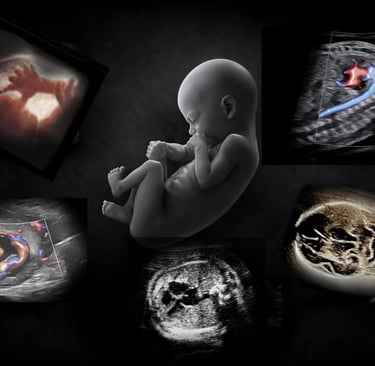
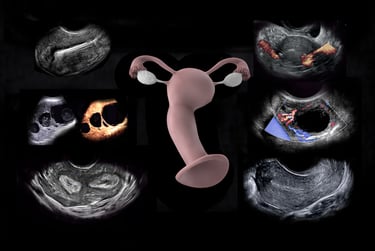
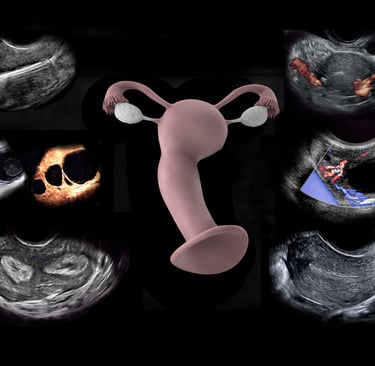
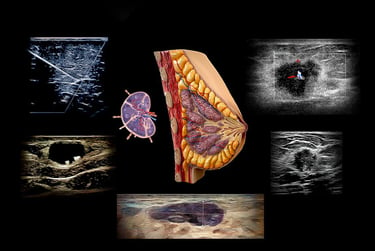
Physicians and Abdominal/Obstetric/Breast Ultrasound
There is presently no Medicare directive requiring sonographer certification as a prerequisite to reimbursement for these procedures.  Oregon, New Mexico have state law requiring all sonographers to be credentialed to practice in any field.  Other states are considering similar actions.  Private insurance carriers may have separate policies.

The American Institute of Ultrasound in Medicine has recommended guidelines in place to ensure the highest standard of facility compliance.  Learn more.

Physicians and Cardiac Ultrasound
Medicare is evolving its policies state by state; many states already require technologist credentialing as a condition for reimbursement.  Physician credentialing is required in some, but not all states as a prerequisite to reimbursement by Medicare.  Learn more.  

Private payers are adopting more rigorous policies, but uniformity across the nation is still years away; ICAEL posts the most current positions of the nations largest private payers on its site here

Eventually the entire US will follow suit.  The National Board of Echocardiography is currently the only credentialing board for doctors and prerequisites include either cardiovascular board certification or specialized post graduate medical training in cardiovascular medicine, plus interpretation experience.

Physicians and Vascular Ultrasound (all applications)
Medicare has directives throughout the entire United States that require physicians interpreting vascular ultrasound provide evidence of specialized training, specific to the technology.  Sonographers performing vascular ultrasound studies must either possess certification un vascular ultrasound or (in some states) perform the exam under the supervision of a certified sonographer. 

Inspect your state’s specific Medicare policy for both physicians and technologists here.  Private insurance carriers may have different policies. ICAVL no longer posts information from private insurance carriers; you will need to contact them directly for current or pending policy.  In general, most require at least 10-15 hours of focused training int the specialty area.

Some states now require formal certification for physicians to read.  Most hospitals‘ labs are ICAVL credentialed, which requires reading physicians to have met formal training standards in medical school or informally, by the following


pathway:
       • 40+ hours of Category 1 CME specific to vascular testing
         within the prior three years, plus
       • 8 hours of supervised practical experience or
         observation in a credentialed vascular laboratory, and
         also
       • documentation of 100 cases interpreted and overread by
         a credentialed-lab physician, in each specialty area of
         application.  Learn more.

Only one agency can credential primary care physicians in all areas of vascular ultrasound interpretation.  As we noted above, this credential is presently required only in certain states.  The American Registry of Diagnostic Medical Sonographers (ARDMS) offers the Registered Physician Vascular Interpretation credential; it has a 96% pass rate. Learn more.

Specifically Regarding Facilities Credentialing
Two separate agencies credential echocardiography and vascular laboratory services: ICAEL and ICAVL, respectively.  Private offices and hospitals providing vascular ultrasound studies (whether in conjunction with echocardiography or as a standalone service) should be--and will eventually be 
required to be--credentialed by the appropriate agency.

The entire body of certification guidelines can now be downloaded for free: ICAEL Guidelines and ICAVL Guidelines.  The process is still voluntary, and payment is still allowed in non-credentialed labs provided physician and sonographer credentialing criteria have been met.  This will likely change by 2012.


Sonographer Credentialing
Three different bodies can credential sonographers in vascular ultrasound: the ARDMS, CCI, or the American Registry of Radiologic Technologists.  The ARDMS and CCI credentials are equally recognized by Medicare in all states and territories; they have nearly equal pass/fail rates and test on the same content.  The ASRT credential is open only to qualified registered radiologic technologists and is not presently recognized by Medicare in all fifty states.

The prerequisites for the ARDMS and CCI are unique to the various entry-level backgrounds and experience.  You can quickly navigate the current prerequisites (always subject to change) with the color-coded charts here.

Our post graduate courses move you closer to all of these goals.
You know better than anyone: This is not easy; it takes time.  And the best use of your time, around the clock, is with us and our 24-hour Scan Lab.

We differentiate ourselves from every other teaching institution by eliminating the most common barriers to hand-eye and bioinformatics competence.  The average compression ratio for our courses is 12:1; twelve years of experience to one day in class.  Comprehensive written materials, integrated with the live experience, amplify and concrete learning for years to come.

Post conference mentoring continues for free, for life.
We offer public courses, private tutorials, and practice/industry consultation on all aspects pertaining to the clinical research, engineering, business, and governmental issues surrounding the field.

Contact us; we’re at your service and glad to help, in any way at all.


Your colleagues throughout the country have already profited from the benefits of our on-site training.


Ultrasound can leverage your time exponentially.
Will you master the process?