Once, procedures made you money. Now, they make you money and save you time.
Procedures have always been the monetary bedrock of the specialist. They’re leveraged the specialist’s income to four times the level of primary care. But now the ground is shifting--and moving forever--in your direction.
The certification guidelines and credentialing processes put in place in the 1980’s were the beginning, perhaps to narrow the provider playing field. Today these same Standards are the pathway to the future of Primary Care as the United States moves toward an outpatient DRG payer model.
You’re going to be incentivized to do more appropriate measures as your level of patient contact than ever before.
The chance is opening for you to provide better, more efficient care at the first point of patient contact. And bringing in key procedures at this point can save you a lot of time.
Only you can decide how to live your career, but others have set the paths as to how you practice it. If you’re contemplating bringing onboard diagnostic ultrasound, consider our expertise a key strategic ally.
We bring the last forty years of ultrasound technology, clinical and engineering science, and business acumen to the classroom, We know what you need at every turn and we know how to connect you to it. Ultrasound isn’t a procedure; it’s a process. A process you can master.
Working with you in class, and remotely afterward through mentoring support, we’re like having your own live Wikipedia, to help you get the core skills, knowledge, and experience to get you credentialed and ready for your next forty years.
We taught the Specialists decades ago. Now it’s your turn to take your seat in class, and your place at the table.
Visit our public and on-site training courses and contact us.
Credentialing Facts Briefing
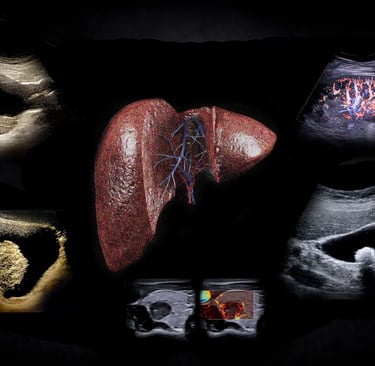
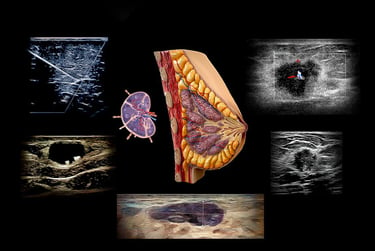
Physicians and Abdominal/Obstetric/Breast Ultrasound
There is presently no Medicare directive requiring sonographer
certification as a prerequisite to reimbursement for these procedures.
Oregon, New Mexico have state law requiring all sonographers to be
credentialed to practice in any field. Other states are considering
similar actions. Private insurance carriers may have separate policies.
The American Institute of Ultrasound in Medicine has recommended
guidelines in place to ensure the highest standard of facility
compliance. Learn more.
Physicians and Cardiac Ultrasound
Medicare is evolving its policies state by state; many states already
require technologist credentialing as a condition for reimbursement.
Physician credentialing is required in some, but not all states as a
prerequisite to reimbursement by Medicare. Learn more.
Private payers are adopting more rigorous policies, but uniformity
across the nation is still years away; ICAEL posts the most current
positions of the nations largest private payers on its site here.
Eventually the entire US will follow suit. The National Board of Echocardiography
is currently the only credentialing board for doctors and prerequisites
include either cardiovascular board certification or specialized post
graduate medical training in cardiovascular medicine, plus
interpretation experience.
Physicians and Vascular Ultrasound (all applications)
Medicare has directives throughout the entire United States that require
physicians interpreting vascular ultrasound provide evidence of
specialized training, specific to the technology. Sonographers
performing vascular ultrasound studies must either possess certification
un vascular ultrasound or (in some states) perform the exam under the
supervision of a certified sonographer.
Inspect your state’s specific Medicare policy for both physicians and technologists here.
Private insurance carriers may have different policies. ICAVL no longer
posts information from private insurance carriers; you will need to
contact them directly for current or pending policy. In general, most
require at least 10-15 hours of focused training int the specialty area.
Some states now require formal certification for physicians to read.
Most hospitals‘ labs are ICAVL credentialed, which requires reading
physicians to have met formal training standards in medical school or
informally, by the following
pathway:
• 40+ hours of Category 1 CME specific to vascular testing
within the prior three years, plus
• 8 hours of supervised practical experience or
observation in a credentialed vascular laboratory, and
also
• documentation of 100 cases interpreted and overread by
a credentialed-lab physician, in each specialty area of
application. Learn more.
Only one agency can credential primary care physicians in all areas of
vascular ultrasound interpretation. As we noted above, this credential
is presently required only in certain states. The American Registry of
Diagnostic Medical Sonographers (ARDMS) offers the Registered Physician
Vascular Interpretation credential; it has a 96% pass rate. Learn more.
Specifically Regarding Facilities Credentialing
Two separate agencies credential echocardiography and vascular
laboratory services: ICAEL and ICAVL, respectively. Private offices and
hospitals providing vascular ultrasound studies (whether in conjunction
with echocardiography or as a standalone service) should be--and will
eventually be
required to be--credentialed by the appropriate agency.
The entire body of certification guidelines can now be downloaded for free: ICAEL Guidelines and ICAVL Guidelines.
The process is still voluntary, and payment is still allowed in
non-credentialed labs provided physician and sonographer credentialing
criteria have been met. This will likely change by 2012.
Sonographer Credentialing
Three different bodies can credential sonographers in vascular
ultrasound: the ARDMS, CCI, or the American Registry of Radiologic
Technologists. The ARDMS and CCI credentials are equally recognized by
Medicare in all states and territories; they have nearly equal pass/fail rates
and test on the same content. The ASRT credential is open only to
qualified registered radiologic technologists and is not presently
recognized by Medicare in all fifty states.
The prerequisites for the ARDMS and CCI are unique to the various
entry-level backgrounds and experience. You can quickly navigate the
current prerequisites (always subject to change) with the color-coded charts here.
Our post graduate courses move you closer to all of these goals.
Our Value Proposition for You
We’re the very best investment of training time and money for your employee.
We’ll build on their knowledge by reaffirming it then expanding it.
We’ll guide them into a core skills set congruent with standard
protocols so they’ll return ready to fit into your own. We’ll build
their confidence and correct their mistakes.
Our course content is congruent with all national standards. Our class
experience exceeds it. We’ll return them to you ready to grow into the
production you need. We can’t implant in them the years of experience
it takes to become expert but we will shortcut months of learning to
become independent, confident, and authoritative quickly.
The investment is well placed:
• Direct flights from every large city in North America in the
most competitive priced air markets.
• No distractions from learning: no bikinis, speedos, beach
bars, or parties. Rather, a professional, safe, respectful
setting for your employee’s professional development.
• The entire course held at the host hotel, with discounted
rates. All suite property, complete with full kitchens. Fifteen
minutes from the airport to the conference site front desk.
• AMA Category I continuing medical education credit gives
your employee the focused, accredited training hours to
prepare for and maintain formal certification.
• Hands-on courses commit up to four hours a day in our
hands-on Scan Lab and the Lab is open around the clock
for independent practice.
• Course reference materials are in depth and support your
staff for years to come.
• Breakfast is complimentary every day; lunch is provided
each day of the course. In-room dining and grocery delivery
service at the hotel; restaurants within safe walking
distance.
• Post conference support goes on for life, for free.
Secure your investment by ensuring your employee’s
commitment: download an employer/employee contract
form, exchanging your training investment for their time commitment.
If you have a larger project involving several staff, or sonographers and physicians, you might find that our on-site training
option is more effective. We bring every necessary element of the
coursework to you and conduct it in your space, on your schedule, and
use your patients as learning models. You benefit by saving on travel
costs, absentee pay, and lost productivity.
Compare us to our colleagues in training. Inspect our public courses, and the ones we’ve got upcoming (and tell us whatever else you think we should create). Then contact us
for answers to any concern or question you might have. We’re
passionate about your success and grateful for the chance to serve.
Learn more: FAQ’s
Ultrasound can leverage your time exponentially.
Will you master the process?