Ultrasound Interpretation Courses for Physicians


Interpretation and Reporting of the Adult Echocardiogram
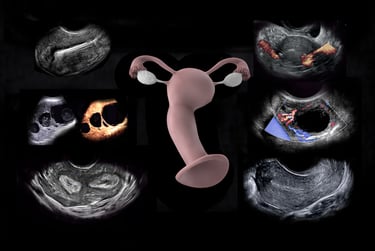
Interpretation of the Pelvic & Obstetric Ultrasound Examination
Interpretation of the Complete Noninvasive Peripheral Vascular Examination
Interpretation of Carotid and Vertebral Duplex Examination


The process of interpretation of the ultrasound examination is evolved from direct knowledge of fundamental processes, data acquisition, clinical science, and differential diagnosis. Although you may link directly to sites for specific detailed information below, we strongly recommend that you visit our Career Training Plans area, with information tailored to the your strategic long-term goals. Note also that special ongoing arrangements can be made for Resident Training Programs. Custom Tutorial Training can also be arranged at your own site (or any destination of your choosing). 


"This was targeted to my needs as a primary clinician. You showed us how to use ultrasound as a supplement to our own knowledge rather than teach us how to issue a term paper style report that no one can understand and I can't use. Thank you."
Elaine Steinmetz, M.D., New York City, New York


Interpretation and Reporting of the Adult Echocardiogram

Interpretation of Adult Echocardiogram

February 12-14
April 18-20
June 6-8
September 5-7

Orlando
Orlando
Dallas
Dallas

Provides a systematic framework of thought in which to evaluate data quality, measure dimensions and flow patterns, and integrate findings into a clear, concise report. Open to technologists and physicians. 

Echocardiography has been changed forever. The reality behind this fact has a very practical basis: Reimbursement for both professional and technical component services will be linked to credentialing of both facilities and the people who staff them, from the physician to the technologist.

Approximately one half of the physicians who take the American Society of Echocardiography national credentialing exam fail it. Included in this group are some of the brightest minds in cardiology, thus illuminating a significant shortcoming of the technical educational process available to them.

In August 1997, the Intersocietal Commission for Accreditation of Echocardiography Laboratories began the process of voluntary credentialing of all echo facilities, regardless of the basis of their location. Shortly afterward, Third Party payers across the United States began announcing their intention to restrict payment based on credentialing and certification. As of 2000 several states have already linked Medicare reimbursement to professional certification and facility credentialing.

Regardless of your previous training, you will benefit immensely from this systematic mindset approach to echocardiographic analysis. 

Our focus in this course is to present for you a systematic approach to cardiac ultrasound data analysis.  We will build the differential diagnosis through the interrelationship of clinical findings with the primary and secondary findings of M-Mode, 2-D, and Doppler data. Your flexible learning experience will integrate dynamic lectures with case examples in every categorical area of function. Complete written course materials will preserve every element of discourse for your future review. 

Class runs from 8:30 am to 5 p.m. the first two days and from 8:30 am to Noon on Day Three. All of your time will be spent in the classroom environment in a highly interactive format. Through the use of slide and lecture presentations we will carefully apply a common, systematic approach to the assessment of each categorical pathological state which might involve the heart. You will have multiple opportunities to privately assess your own level of skill in the analysis and concise reporting of data. 

Ten to fifteen Guests usually comprise the class. Your peers will likely include physicians from internal medicine and cardiology backgrounds as well as experienced technologists. This is not a hands-on seminar. Your entry-level or advanced hands-on skills can be refined in either our Hands-On Cardiac Imaging or Cardiac Doppler courses conducted continuously throughout the year.

3 day seminar.   Tuition:  $1,200
SDMS/ARRT CME HOURS: 17.0 where applicable
Apply for Registration

top of page


Interpretation of the Pelvic & Obstetric Ultrasound Examination

All eyes—including those in Washington, D.C.—are now focused on the safe practice of health care in motherhood.

The American College of Obstetrics & Gynecology recognizes the impending pressure from government and private sectors to credential the use of ultrasound in this field. All parties stipulate that the physician director undergo at some point a formal course of study focused on the interpretation and standardized reporting of test data. 

This course will lay the cornerstone and foundation for your learning to see with the eye, and think with the mind, of the ultrasound instrument. We will help you establish the scientific bedrock foundation you require. Our target is the interrelationship of clinical findings with real-time ultrasound image data. We’ll use stimulating lectures, team case analysis, and individual self-assessment exercises to patiently help you reach your goal.

This is not a hands-on seminar; your entry-level or advanced hands-on skills can be refined in our Hands-On Pelvic/Obstetric Imaging seminar conducted continuously in Dallas.

Class runs from 8:30 am to 4:30 pm on Day One, and from 8:30 am to noon on Day Two. We’ll use an interactive lecture format to detail the mental mindset and the systematic approach to critical analysis of both pelvic pathology as well as uncomplicated and abnormal conditions of each stage of pregnancy.

Unique in this course is the systematic approach to each scenario. Although this course cannot substitute for the years of experience required to truly master the subject, it is an uncommonly effective framework from which to begin. 

Six to ten Guests usually comprise the class. Your peers will likely be physicians and accomplished technologists from varied clinical backgrounds.

2 day seminar.   Tuition:  $600.
SDMS/ARRT CME HOURS: to be applied for
Course dates pending
contact us for specific information
Apply for Registration

top of page


Interpretation of the Complete Noninvasive Peripheral Vascular Testing

Interpretation of Noninvasive PV Dates

February 15-16
March 7-8
July 25-26    
October 10-11
October 31-Nov 1

Orlando
Dallas
San Francisco
Dallas
Orlando

The ensemble of tests that has evolved for peripheral vascular testing over the last twenty-five years has posed a daunting challenge to the experienced technologist of physician new to its use. To become successful, you’ll have to be able to integrate a broad range of physics, hemodynamic, clinical and technical factors together to create an accurate credible report.

Facilities credentialing is becoming more important to third party payers, and first on the list is the focused, formal training of the physician director.

But this tide of change in health care offers opportunity as well: the chance to serve a broader segment of our patients through the expanded use of such cost-effective testing on the primary care level.

Master each element of every test, and learn how to put the complete anatomical and physiologic picture together, quickly and without compromise. In addition to our intensive in-class instruction, you’ll have our post conference support forever, for ree.

Class runs from 8:30 am to 4:00 pm on day one, and from 8:30 am to noon on day two. We conduct the class in three overlapping modules: Lower extremity arterial workup, lower extremity venous assessment, and upper extremity applications. unique in this course is the systematic approach to each scenario. We analyze completely each recommended test and incorporate each into the composite workup process, focusing all the while on the final report.

We’ll also update you on the most recent changes that will have transpired in the political and business climate affecting the field. Eight to ten Guests usually comprise the class. Your peers will likely be physicians and accomplished technologists from differing fields. Note that our Hands-On course in this area is held separately.

Note: This course runs all day Friday and concludes at Noon on Saturday, followed immediately by Carotid Interpretation, described below.

1.5 day seminar.   Tuition:  $1,200.
SDMS/ARRT CME HOURS: 11.0 where applicable
Apply for Registration

top of page


Interpretation of the Carotid & Vertebral Duplex Ultrasound
Some important facts have already altered how we will perform vascular ultrasound: 

Interpretation of Carotid/Vertebral Dates

February 16-17
March 8-9
July 26-27
October 12-13
November 1-2

Orlando
Dallas
San Francisco
Dallas
Orlando

1) Medicare has recommended that effective January 1, 1998, all fifty states require credentialing of all technologist staff as a prerequisite to facility reimbursement; 

2) Already, more and more HMO’s, PPO’s and private insurance carriers are requiring ICAVL (Intersocietal Commission for Accreditation of Cardiovascular Laboratories) facility credentialing as a prerequisite to reimbursement; and 

3) ICAVL expects the physician director of the lab to undergo a formal program of targeted instruction in the interpretation of tests and maintain continuing education in the field.

New patient selection criteria from the NASCET (North American Symptomatic Carotid Endarterectomy Trial) and ACAS (the Asymptomatic Carotid Atherosclerosis Study) multicenter studies have pushed the threshold for aggressive patient management to lower and lower levels of disease, requiring of us more than just a working knowledge of "hemodynamically significant" stenosis. Update your knowledge quickly in a friendly, small-class-size setting stimulated by didactic and inter-active discussion. Our Cast faculty have worked with the technology from the time it was an experimental prototype, and have made significant contributions to the directions it has taken. In fact, this course has been conducted continuously since its debut in 1983.

This is not a hands-on seminar. Your entry-level or advanced hands-on skills can be refined in either our Hands-On Carotid and Vertebral Duplex Imaging course conducted continuously at our facilities in Dallas and Orlando.

Class runs from 1:00 pm to 4:00 pm the first day and from 8:30 am to 4:00 pm the second day (which includes a working lunch). Interactive classroom lectures emphasize the basic science and mindset necessary to interpret and report complex pathologic processes as they occur. Fifteen to twenty-five Guests usually comprise the class. Your peers will likely include both physicians and experienced technologists, representing every related area of the field

Note: This course convenes at 1:00 pm  on Saturday and concludes on Sunday afternoon.  It is preceded immediately by PV Interpretation, described immediately above.

1.5 day seminar.   Tuition:  $1,200.
SDMS/ARRT CME HOURS: 11.0 where applicable
Apply for Registration

top of page


New item

Search KMA (results appear below):

Serving the Front Line of diagnosis in medicine since 1981™


KMA 2008 Course Calendar

New San Francisco Location

KMA Clinical Services Division

Copyright © 2005-2008 Keith Mauney & Associates Ultrasound Training Institutes. All Rights Reserved.x
KMA Home Contact KMA